
Frequently Asked Questions
ATHENS, GEORGIA · HELP AVAILABLE 24/7
Straightforward answers for a stressful moment. Find out what to do about a flat tire, a vehicle that won’t start, or keys locked inside your car, what to send when you call, and how to arrange roadside help.
Flat tires & no-spare questions
What if I have a flat tire but no spare?
Move out of traffic as safely as possible and avoid driving on the flat. Call or text Dawgs with your location and vehicle details. A suitable mobile replacement may be available; if the location is unsafe or the vehicle needs shop work, towing may be the better choice. Read our guide to a flat tire with no spare in Athens.
Can Dawgs bring me a replacement tire?
Yes. Dawgs can help locate, deliver, and install a replacement tire at your location, subject to tire availability and safe access. Send the tire size and your vehicle details so we can confirm the fit, price, and current ETA. See mobile tire service or how mobile replacement works.
Can a sidewall puncture be repaired?
No. A sidewall puncture is outside the safe puncture-repair area and calls for tire replacement. Even a small tread puncture needs a professional inspection before repair is approved. Our flat-tire guide explains repair and replacement limits.
When do I need a tow instead of mobile tire service?
A tow may be needed when your location is unsafe for service, the correct tire is unavailable, multiple tires are damaged, or wheel, suspension, or other damage prevents safe driving. Call with the details so we can help choose the next step. Learn about Athens towing service and when towing makes sense.
ROADSIDE RESCUE RADIO · EPISODE 2
Dead battery or something worse? Battery & jumpstart FAQ
A jumpstart may get an engine running, but it does not explain why the battery went flat. These answers accompany Episode 2 of Roadside Rescue Radio: “Dead Battery or Something Worse? How to Know When a Jumpstart Isn’t Enough.”
How do I know when a jumpstart isn’t enough?
Slow cranking, clicking, repeated jumpstarts, or a vehicle that starts and then dies again call for testing rather than assuming another jump will fix it. Those symptoms alone cannot tell you whether the battery, its connections, the charging system, or another component is responsible. Ask about battery testing and mobile battery service in Athens, and listen to Episode 2 for the warning signs to discuss with a technician.
Does needing a jumpstart mean I need a new battery?
Not necessarily. A discharged battery may still be usable after proper charging, while a worn or failed battery may need replacement. Testing helps distinguish the two and can point to a problem that a new battery alone will not solve. Tell the technician if lights were left on or the vehicle has needed repeated jumps. See our jumpstart service and battery replacement options.
What if my car starts with a jump but dies again?
Tell the technician whether it stalled while running or simply would not restart after being switched off. That difference helps guide the checks. A successful jump does not rule out a battery or charging-system problem. Arrange an inspection rather than relying on repeated jumps; if the vehicle cannot run reliably or needs shop repairs, ask about towing in Athens. Episode 2 explains why testing matters.
Can mobile battery replacement help me avoid a tow?
When testing confirms a failed battery and the correct replacement is available, installation at a safe, accessible location may get you moving without a tow. A charging-system, starter, or other mechanical fault may need further repair instead. Call or text your vehicle details and location to confirm the fit, availability, price, and current arrival estimate for Dawgs’ mobile battery service.
What should I tell Dawgs when my vehicle won’t start?
Send your exact location, vehicle year, make and model, and a callback number. Describe whether it cranks slowly, clicks, or does nothing; mention warning lights, recent jumpstarts, and whether it starts and then stalls. Include access details such as a gate code or parking-deck level when arranging service directly with Dawgs. Call or text 762-351-1161 for 24/7 help, or review jumpstart service before calling.
ROADSIDE RESCUE RADIO · EPISODE 3
Locked out of your car? Vehicle lockout FAQ
Keys locked inside? These answers accompany Episode 3 of Roadside Rescue Radio: “Locked Out of Your Car? What to Do — and What NOT to Do.” Learn the next steps, common mistakes to avoid, and what to tell us when you call.
What should I do if my keys are locked inside my car?
Stay in a safe place away from moving traffic. If it is safe to check, see whether another door is already unlocked or whether someone can bring a spare key. If you still need help, call or text Dawgs at 762-351-1161 with your location and vehicle details. Learn about vehicle lockout service in Athens or listen to Episode 3.
What should I avoid doing during a vehicle lockout?
Avoid forcing the door or improvising with coat hangers, screwdrivers, or other tools. You could damage the glass, weather seals, wiring, or lock mechanism and turn a lockout into a costly repair. For a routine lockout, arrange professional help through our lockout service. If someone is in immediate danger inside the vehicle, call 911 and follow the dispatcher's instructions.
What information should I have ready when I call?
Provide your exact location, vehicle year, make and model, and a callback number. Tell us where the keys are, whether the engine is running, and whether anyone or any pet is inside. Mention access details when arranging service directly with Dawgs, and have identification and proof that you are authorized to access the vehicle available. Call to confirm service availability, price, and the current arrival estimate.
Is a vehicle lockout the same as a lost or broken key?
No. A lockout usually means a usable key is locked inside the vehicle. A missing, broken, or nonworking key may require an automotive locksmith or dealer for key replacement or programming. Tell Dawgs which situation you have before arranging service; unlocking a door does not replace a missing key. Episode 3 explains the difference.
What if a child, vulnerable person, or pet is locked inside?
If a child or vulnerable person is trapped inside, or a pet appears distressed or faces dangerous heat or cold, call 911 immediately. Do not wait for a routine roadside appointment. Tell the dispatcher your exact location and what you can see, stay nearby if safe, and follow their instructions.
Does Dawgs offer 24/7 car lockout help in Athens?
Yes. Dawgs Roadside Rescue offers 24/7 vehicle lockout assistance in Athens and surrounding communities. Call or text 762-351-1161 with your location and vehicle details to confirm availability and a current arrival estimate. For other roadside problems, see all roadside services.
ROADSIDE RESCUE RADIO · EPISODE 4
Flat tire on the highway? Safety & roadside-help FAQ
Where you stop matters as much as the tire itself. These answers accompany Episode 4 of Roadside Rescue Radio: “Flat Tire on the Highway? The Biggest Mistakes Drivers Make.”
What should I do if a tire fails while I’m driving on the highway?
Keep a firm grip on the steering wheel, avoid abrupt steering or hard braking, and slow down gradually as you maintain control. When safe, signal and move toward a place away from traffic. Turn on your hazard lights once safely stopped. If you cannot get clear of a travel lane or face immediate danger, call 911 and describe your location. Listen to Episode 4 for common mistakes to avoid.
When should I avoid changing a tire myself?
Do not attempt a tire change where you or your equipment would be exposed to moving traffic, on unstable or sloping ground, or when visibility and space are inadequate. Never stand between your vehicle and passing traffic. A usable spare does not make an unsafe location suitable for a tire change. Tell Dawgs about the road conditions so we can discuss tire service or towing to a safer location.
Can I keep driving on a flat tire to reach an exit?
Driving on a flat can damage the tire and wheel and reduce control. Do not continue a long distance just to reach a preferred exit. Your immediate priority is getting out of active traffic as safely as possible; once safely stopped, arrange help rather than continuing on a flat. Run-flat tires have specific limits in the vehicle and tire instructions, so do not assume every tire can be driven while flat. See our flat-tire guide.
What should I check about my spare before I need it?
Confirm that your vehicle actually has a spare, that it is inflated to its specified pressure, and that the jack, wheel-lock key if required, and other tools are present. Follow the vehicle manual and the spare’s speed and distance limits. A compact spare is a temporary solution. If your spare is missing or unusable, ask about mobile tire replacement; availability and safe access must be confirmed.
What should I tell Dawgs when I have a highway flat?
Give the highway name, direction of travel, nearest exit or mile marker, and your exact location if available. Include the vehicle year, make and model, which tire is flat, the tire size if safely available, and whether you have a usable spare. Describe how far the vehicle is from traffic and any damage you can see without putting yourself at risk. Call or text 762-351-1161 to confirm availability and a current arrival estimate.
When is towing better than roadside tire replacement?
Towing may be needed if the shoulder is too narrow for safe work, the right tire is unavailable, multiple tires are damaged, or wheel or other vehicle damage prevents safe driving. Mobile replacement may avoid a tow when a suitable tire is available and the location is safe and accessible. Explore Athens towing service, mobile tire service, and Episode 4.
ROADSIDE RESCUE RADIO · EPISODE 5
Car won’t start? Battery, alternator & starter FAQ
Similar symptoms can have different causes. These answers accompany Episode 5 of Roadside Rescue Radio: “Car Won’t Start? Battery, Alternator, or Starter?” Describe what the vehicle does, and let testing guide the repair.
How are the battery, alternator, and starter different?
The battery supplies electrical power for starting, the starter turns the engine to get it running, and the alternator supplies electrical power and charges the battery while the engine runs. A fault in any of these systems, or their connections, can contribute to starting problems. Symptoms alone do not identify the failed part. Ask about battery testing and mobile battery service before assuming a replacement is needed.
Does rapid clicking or slow cranking always mean a bad battery?
No. These symptoms can occur when there is not enough electrical power reaching the starter, but a discharged battery, poor connections, or other faults can be responsible. A single click with no cranking also does not prove the starter needs replacement. Tell the technician exactly what you hear and whether the engine turns over. Episode 5 explains why the symptoms matter.
If a jumpstart works, does that prove the battery is good?
No. A successful jump only shows that the vehicle started with assistance at that moment. The battery may still be weak, discharged, or failing, and the cause of the discharge may need attention. Repeated jumps are a reason to arrange testing. See our jumpstart service and Episode 2 battery and jumpstart FAQ.
Do dim lights or a battery warning light mean I need a new battery?
Not by themselves. Dim lights can have several electrical causes, and a battery warning light that stays on while the engine is running can indicate a charging-system problem. Replacing the battery alone may not fix it. Tell the technician when the light appeared and whether the engine stalled or would not restart. If the vehicle cannot run reliably, ask about towing in Athens rather than relying on another jump.
Why test before replacing a battery, alternator, or starter?
Different faults can produce similar symptoms. Checking the battery, its connections, and the starting and charging systems helps avoid replacing a part that was not the cause. When testing confirms a failed battery and the correct replacement is available, mobile battery replacement may help at a safe, accessible location. Other faults may require further diagnosis or repair. Call Dawgs to discuss the symptoms and available service.
What should I tell Dawgs when my car won’t start?
Send your location, vehicle year, make and model, and a callback number. Describe rapid clicks, a single click, slow cranking, or an engine that cranks normally but does not start. Mention dim lights, warning lights, recent jumpstarts, and whether it starts and then stalls. Describing the symptoms is more helpful than guessing which part failed. Call or text 762-351-1161 for 24/7 help, or review our roadside services.
Roadside Service, Pricing & Booking Questions
-
Call 762-351-1161 for a quote based on your location, vehicle and service. For tires, batteries, fuel or towing, confirm parts or fuel costs, distance and any applicable charges before dispatch.
-
We provide a current arrival estimate when you call. Timing depends on your location, traffic, weather, access and current calls. We do not promise the same ETA for every request.
-
Dawgs is based in Athens, GA, serving Athens and surrounding communities within approximately 25 miles. Send your exact location to confirm coverage and availability.
-
Yes. Call or text 762-351-1161 any time, day or night, for current availability and roadside help.
-
Yes. We can install your usable spare or help locate, deliver and install a replacement tire onsite. Send your tire size, vehicle details, location and whether a spare and locking lug nut key are available. Replacement availability depends on tire size.
-
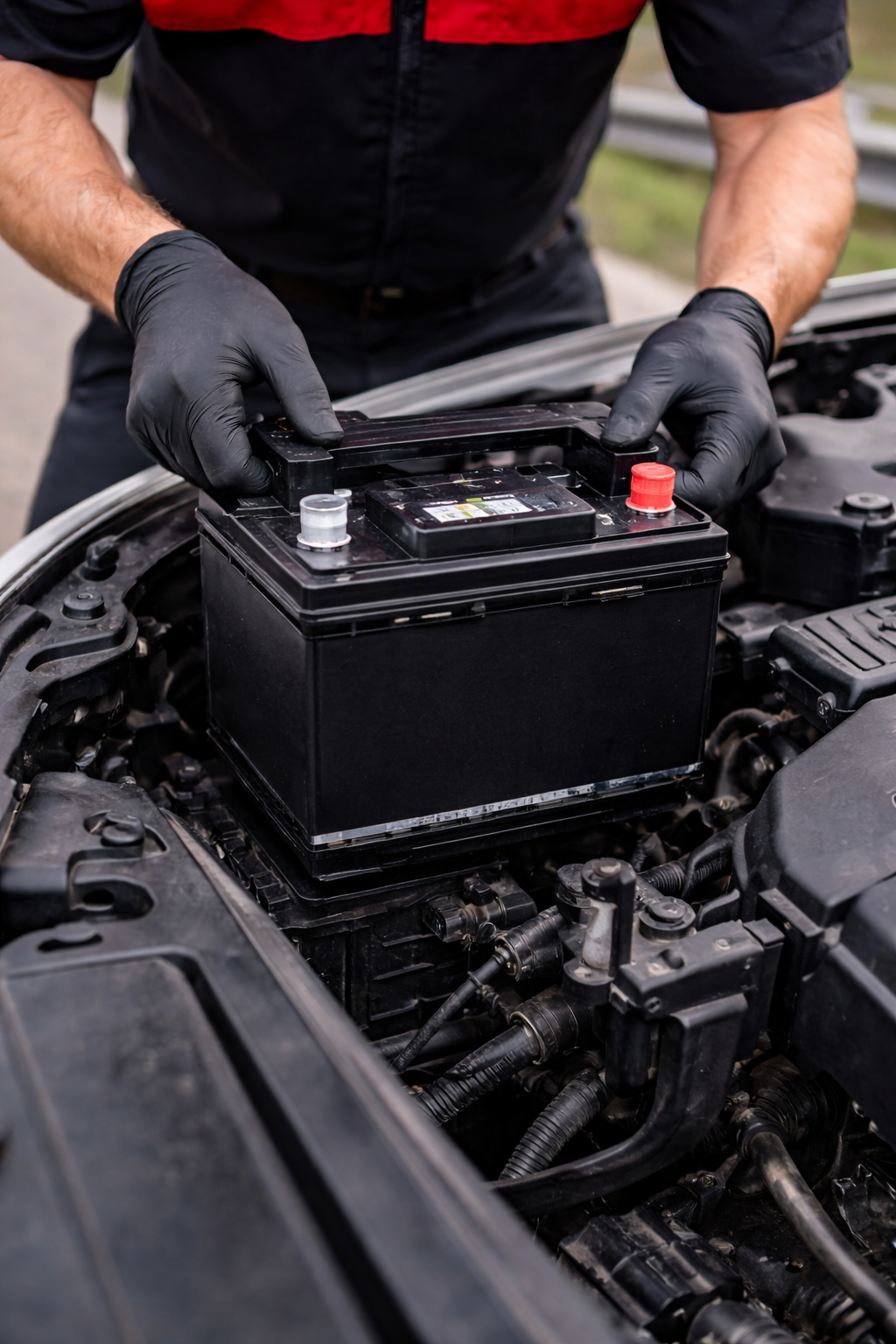
Yes. We bring and install a suitable replacement battery at your location, subject to vehicle compatibility and availability. Send the year, make and model and describe the starting problem so we can confirm the battery, price and ETA.
-
Tell us what happens when you try to start the vehicle. A jumpstart provides starting assistance; a replacement installs a new battery. Starting problems can have other causes, so we’ll discuss the appropriate service before dispatch.
-
Yes. Call with the pickup location, vehicle year/make/model, condition and destination. Mention whether it rolls and steers and whether keys are available. We’ll confirm transport availability, pricing and the current ETA.
-
We provide vehicle lockout assistance. Tell us your vehicle details and whether the keys are inside, missing or locked in the trunk. Key replacement and programming are different services; confirm the help you need before dispatch.
-
Yes. Call for fuel delivery availability. Provide your exact location, vehicle details and required fuel type. We’ll confirm the quantity, fuel cost, delivery charge and current ETA before arranging service.
-
Ask us to confirm current payment options when requesting service. Confirm the full quote, when payment is due and how to obtain a receipt before dispatch.
-
If you have a motor club or insurer roadside plan, contact the plan provider for dispatch authorization and coverage details. Tell Dawgs who is arranging the service. Do not assume a direct booking will be covered or reimbursed; confirm this with your provider first.
-
Call or text 762-351-1161 with your exact address or map pin, vehicle year/make/model, the problem and a callback number. Add tire size for tire help, fuel type for fuel delivery, or a destination for towing. Include parking, gate or road-direction details. Call for urgent dispatch rather than relying on the general question form.
have more questions in mind?
Feel free to ask away and submit below!